The Long Way Home: In Praise of Walking Nowhere in Particular
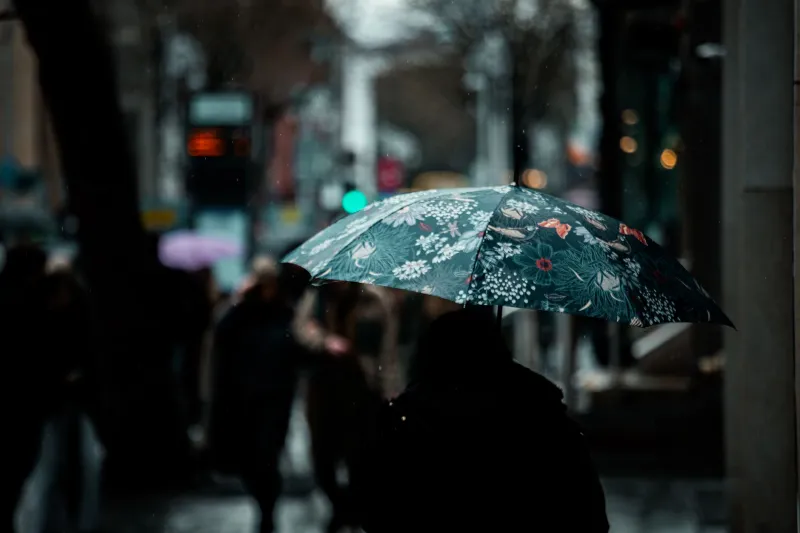
Somewhere in the last few years, going for a walk stopped being a thing you did and became a thing you logged. Pace, distance, rings closed, streaks maintained. The evening stroll was recategorised as training. And in the process, something quietly valuable got squeezed out: the purposeless walk, the one with no destination and no data, taken purely because the light was good and you fancied seeing what was at the end of that street.
In 2026, that older habit is coming back — and it has picked up a certain style along the way.
The tyranny of the tidy walk
Step counts are seductive because they are simple. Ten thousand of them, we are told, is the number to hit. It is worth remembering that the figure began life as a marketing slogan for a Japanese pedometer, not as a piece of clinical guidance. There is nothing wrong with walking for fitness. But when every walk becomes a measurement, the walk itself shrinks to a number, and the street shrinks to a track.
The urban wander asks for something different: attention rather than output. It is not anti-exercise. It is simply uninterested in being scored.
What the flâneur knew
The idea is not new. Nineteenth-century Paris had its flâneur, the idler who wandered the arcades and watched the city work. Walter Benjamin wrote about him; the Situationists turned him into a political act; Iain Sinclair spent years walking the edges of London and writing it down. British psychogeography has always been a stubborn, slightly eccentric tradition, and it has never quite gone away.
What has changed is who is doing it. The wander is no longer the preserve of the essayist or the art student. It has become a genuinely popular pastime, documented on group walks, in small newsletters, in the notebooks people carry. The appeal is obvious once you try it: the city is free, it is inexhaustible, and it looks different every time you stop trying to get anywhere.
Dressing for the weather, not the workout
Here is where style enters, quietly. There is a particular British discipline to walking well: you are dressing for four seasons in one afternoon, and you are doing it in public. The aim is not to look like you are about to climb something. The aim is to be comfortable enough to keep going and presentable enough to stop for a coffee.
That usually means layers rather than bulk, a shell that can be stuffed into a bag when the Met Office gets it wrong, and shoes with a sole that can handle wet cobbles without announcing themselves as hiking gear. A tote beats a rucksack if you are only out for an hour; a small notebook beats a phone if you want to remember what you saw. The old advice holds: wear nothing you would be embarrassed to sit down in indoors.
A short guide to wandering well
-
Pick a direction, not a destination. Choose a landmark you can see and walk towards it by the least efficient route available.
-
Take the turning you would normally skip. The interesting street is almost always the one that does not lead anywhere useful.
-
Notice one thing per street. A door, a sign, a bit of brickwork that does not match its neighbours. It sounds like a writing exercise. It is one, and it works.
-
Walk at the wrong time. Sunday morning, or the hour after the shops shut. Cities are more legible when they are half empty.
-
Leave the headphones in your pocket for the first twenty minutes. You will hear the place, which is half of what you came for.
-
End somewhere with a chair. A walk with a proper finish — a café, a bench, a pint — is a walk you will repeat.
Cities that reward getting lost
You do not need a famous city for this. Sheffield's steep streets give you views for free; Newcastle's bridges make a loop out of almost any route; Bristol's harbourside is best approached from the wrong end; Glasgow's grid is full of lanes that do not behave. Norwich, York, Edinburgh and Cardiff all repay an hour of aimless movement. Even London, which is not short of attention, has whole quarters where nobody is going anywhere in particular.
The point of it
The urban wander is not a productivity hack, and it is not a personality. It is simply a way of spending an afternoon that leaves you with something to think about and nothing to upload. In a year that will keep asking you to optimise, the most stylish thing you can do may be to walk out of your front door with no plan at all, and come back when you are ready.