A Hedge Trimmer, Four Cake Tins and a Sense of Belonging
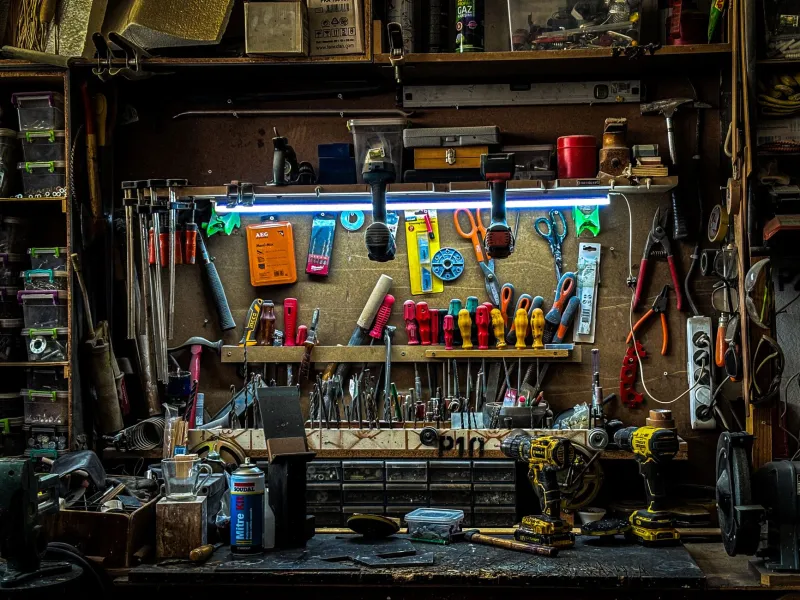
There is a particular kind of shop that has no till, no window display and absolutely no interest in selling you anything. You'll find it above a community centre, in a converted garage, or tucked into the back of a church hall that smells faintly of tea and old hymn books. On the shelves: a pillar drill, six cake tins in graduated sizes, a carpet cleaner, a projector, a pair of walking poles and a label-maker someone donated in 2019. You take one home. You bring it back. That's the whole business model.
These are libraries of things, and in 2026 they've become one of the quietest success stories on the British high street — or rather, just off it.
The shop that doesn't sell you anything
The idea isn't new. The first UK versions started appearing in the mid-2010s, mostly in London and the bigger cities, run by people who'd done the maths on how often the average household uses a power drill. (The answer, in case you're wondering, is roughly twelve minutes a year. It then sits in a cupboard for a decade, quietly depreciating.)
What's changed is the spread. Where once you needed to live within cycling distance of a specific corner of South East London, there are now lending schemes in Cardiff, Leeds, Glasgow, Bristol, Norwich, Sheffield and a growing number of market towns where the local council, a housing association or a particularly determined retired engineer has decided it's worth doing. Some operate out of permanent premises with opening hours. Others run monthly pop-ups in village halls. A few have lockers you can open with an app, like a very sensible vending machine for secateurs.
What's actually on the shelves
It varies, and that's half the charm. The reliable core is DIY: drills, sanders, jigsaws, ladders, wallpaper steamers, tile cutters. After that, it gets pleasantly eccentric.
- Garden kit. Hedge trimmers, strimmers, pressure washers, long-handled loppers for the bit of the tree you can never reach.
- Kitchen kit. Cake tins, bundt moulds, fondue sets, giant stockpots, a preserving pan for the one weekend a year you make chutney.
- Party and hosting. Folding tables, bunting, a proper punch bowl, fifty champagne flutes, a decent speaker.
- Camping and outdoors. Tents, roll mats, cool boxes, a Kelly Kettle.
- Making and mending. Sewing machines, overlockers, knitting needles, a badge maker, sometimes a potter's wheel if you're lucky.
- Cleaning. Carpet cleaners, steam mops, window kits for the upstairs panes.
The logic is simple: buy once, share often. A decent pressure washer costs north of £120 and gets used twice a year. A library membership costs a fraction of that and frees up the hall cupboard.
How it works, and what it costs
Most schemes run on one of three models. There's the annual membership — commonly somewhere between £10 and £40 — which lets you borrow at low or no cost per item. There's the pay-per-borrow version, usually a few pounds a day with a refundable deposit on the expensive stuff. And there's the volunteer-run swap, which often asks for nothing more than a small donation and a signature.
A few practical notes before you turn up:
- Check what you need to bring. Photo ID and proof of address are standard. Some ask you to watch a short induction video before they'll hand over a sewing machine or anything with a blade.
- Book ahead for the popular items. Carpet cleaners and gazebos go fast in summer; pressure washers vanish in spring. Reserve online if the scheme offers it.
- Ask about consumables. You'll usually need your own sandpaper, sewing thread, or strimmer line. Nobody expects the library to supply them, and asking nicely never hurts.
- Know your return date. Extensions are normally fine if you ring ahead. Silence is not.
- Check your council's website first. Many local authorities now list nearby schemes alongside recycling and bulky-waste info, which saves a lot of searching.
The etiquette nobody prints on the label
Here's where the libraries earn their keep as social infrastructure rather than just cheap hire.
The unwritten rules are straightforward and quietly revealing. You return things clean — properly clean, not a cursory wipe. You return them with the box, the manual, the little bag of screws. If you break something, you say so plainly and offer to contribute; every scheme budgets for wear and tear, and nobody is scandalised by an honest phone call. What does annoy people is the phantom borrower: the one who goes quiet, keeps the drill for six weeks and turns a friendly volunteer into a chaser.
And then there's the Saturday morning choreography. You arrive with a hedge trimmer, someone else is leaving with a cake tin, and for four minutes you're all standing around talking about the state of the back garden, or whether the strimmer has a fault, or where to get a decent replacement blade. It's not a friendship. It's better than nothing, which is roughly what most of us get from a trip to a hardware superstore.
Why it's working now
Partly it's space. Flats and smaller rented homes don't come with a shed, and there are only so many things you can sensibly stack behind a door. Partly it's money — a membership that covers a year of odd jobs is easy to justify against a single purchase. And partly it's the slow shift in how people think about owning stuff at all. The same instinct that has us swapping clothes and fixing toasters instead of binning them applies rather neatly to a tile cutter.
But the honest reason these places thrive is the people who run them. Ask a volunteer why they gave up their Tuesday evenings to catalogue 400 items and you'll usually get a variation on the same answer: because it's nice when the neighbours know where to find a ladder.
A Saturday well spent
If you've been meaning to sort the front hedge, hang a shelf, or borrow four matching cake tins for a birthday, it's worth twenty minutes of Googling. Search your town plus 'library of things', check the community noticeboard in the library itself, or ask in the local Facebook group — someone will know.
Then join, borrow something modest, and bring it back on time. You'll own slightly less than you did before, and somehow know a few more people. That's a decent trade for a Saturday morning.