Click, Click, Calm: The Quiet Pull of the Charity-Shop Jigsaw
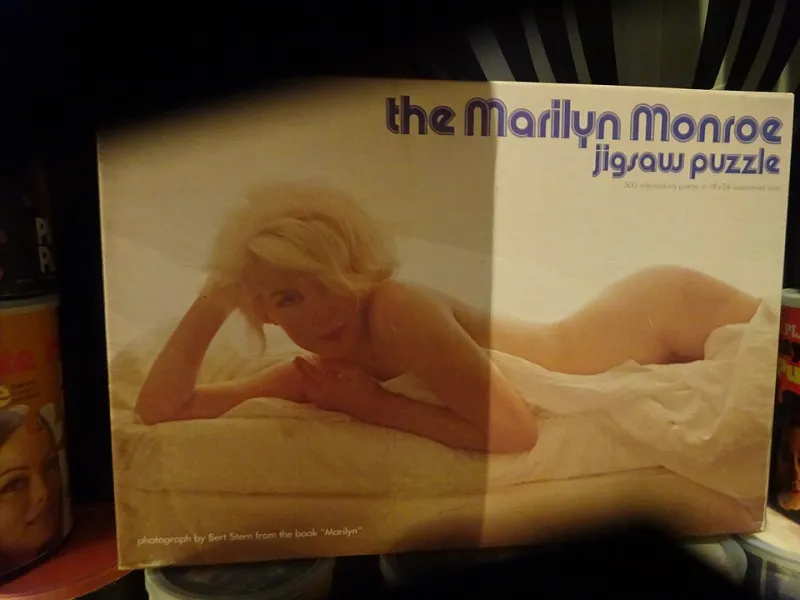
Photo: Vintage Fan 5678, CC BY 4.0, via Wikimedia Commons
On a damp Tuesday in November, the window of a charity shop in south London is doing what charity-shop windows do best: promising more than it shows. Between a ceramic owl and a stack of Catherine Cookson paperbacks sits a jigsaw box, held together with a rubber band and a strip of masking tape. On the lid, in biro: ‘1,000 pieces. Complete. Probably.’ It costs £2.50.
That ‘probably’ is the whole appeal. A new jigsaw from a smart stationery shop will set you back £20 or more. It will be sealed, pristine and utterly predictable. The charity-shop box is a small, cardboard gamble. It might be missing an edge piece. It might contain a stray piece from a completely different puzzle, a small rectangular ghost from someone else’s Christmas. It might smell faintly of loft. And yet, as anyone who has fallen for this quiet habit will tell you, that is precisely the point.
The £3 winter economy
Second-hand jigsaws have always been with us, stacked in corners of charity shops like patient houseguests. But this winter they feel less like background clutter and more like a small cultural shift. In 2026, with the nights drawing in and the heating doing its best, a jigsaw is affordable entertainment that asks for nothing but a flat surface and a bit of patience. It doesn’t need a subscription. It doesn’t ping. It doesn’t care what you look like.
Charity shops have noticed. Boxes that once sat unloved for weeks are being replenished with handwritten labels: ‘Checked by Margaret’, ‘One piece missing — hence 50p’, ‘Vintage, wooden, please handle with care’. Some shops now run informal piece-counting sessions on quiet afternoons, volunteers sitting around a table with a mug of tea and a half-finished picture of a Highland cottage, confirming that yes, the sky is all there. It is the least glamorous volunteering in Britain, and possibly the most soothing.
Why now? Because screens are exhausting
The rise of the second-hand jigsaw fits neatly alongside Britain’s wider appetite for slow, low-cost pastimes. We have spent the last few years learning to bake sourdough, walk nowhere in particular, sit in listening bars and mend our own lamps. The jigsaw is the latest recruit to that quiet army. It is a analogue activity in a digital year, a way of being gently occupied without being optimised.
There is also the simple matter of money. A £3 box offers hours of entertainment — more, if you count the time spent searching for the missing piece and the time spent pretending you don’t mind. A cinema ticket costs more than a jigsaw and lasts two hours. A jigsaw can sit on the kitchen table for a week, a half-finished sky slowly filling in while the kettle boils and the radio murmurs in the background. It is not a hobby so much as a household rhythm.
The swap table phenomenon
What has pushed the jigsaw from solitary pastime to something closer to a social scene is the swap. Libraries and cafés across the country have started setting aside a table: bring a box, take a box, no membership, no fee. In Leeds, a library runs a Saturday morning puzzle swap alongside its children’s reading group. In Bristol, a café keeps a permanent stack by the window, with a note that reads: ‘Take one home. Bring it back when you’re done. Or don’t. We’re not the police.’
The beauty of the swap table is that it asks very little of you. You can arrive alone, spend ten minutes choosing a box, and leave without speaking to a soul. Or you can sit down at the communal table, where a half-finished 500-piecer of a hot-air balloon is permanently in progress, and add a few pieces while your coffee goes cold. Nobody expects conversation. The puzzle does the talking. For people who find small talk difficult, it is a rare kind of company: shared attention without performance.
There are rules, of course, though nobody writes them down. Don’t hog the edge pieces. Don’t force a piece that clearly belongs to the farmyard into the sky. And if you finish a puzzle at the swap table, you don’t take it apart immediately — you leave it out for a day, so others can admire the whole thing. Then you put it back in the box, rubber band and all, and start again.
The missing piece is part of the deal
A new jigsaw promises completeness. A second-hand one offers something more interesting: evidence of other hands. You can tell a well-loved puzzle by the softness of its edges, the way the pieces have loosened slightly, the faint pencil marks on the back. Someone has done this before. Someone has sat where you are sitting, sorting the same blue pieces, muttering the same mild curses.
The missing piece, when it comes, is a small philosophical gift. You can spend an evening convinced it is under the sofa, then find it three weeks later in a coat pocket. Or you can accept it and move on. There is something oddly freeing about a puzzle that cannot be finished perfectly. It reminds you that the point was never the picture. The point was the clicking.
A table, a box, a bit of quiet
Jigsaws are not new, of course. They were invented in the 1760s by a London mapmaker who pasted maps onto wood and cut them into pieces for geography lessons. For centuries they have been a rainy-day staple, a hospital-bed companion, a family argument waiting to happen. What is new is how many of us are rediscovering them in charity shops, for the price of a coffee, as a way of slowing down.
So this winter, if you find yourself scrolling without purpose, consider the alternative. Clear a corner of the kitchen table. Buy a box with a handwritten note on the lid. Invite a friend, or don’t. Put the kettle on. Start with the edges. Listen to the small, satisfying click of a piece finding its place. It is not a cure for anything. But it is a very good way to spend an evening, and sometimes that is enough.