The Unhurried Sunday: How Doing Less Became Britain’s Quietest Flex
There was a time, not so long ago, when a well-spent Sunday was measured in achievements. The early gym class. The farmers’ market run. The roast that somehow took four hours and three pans. By Sunday evening you were exhausted, mildly resentful, and already behind on Monday. In 2026, a different sort of Sunday is taking hold across the UK — and its chief ambition is to ask very little of you at all.
Call it the slow Sunday: a deliberately under-scheduled stretch of hours that might include a pan of something simmering, a bath that goes cold before you get out, and a phone left in another room. It is not a new idea. But it is being reframed, quietly, as less of a treat and more of a standard. The slow Sunday has become the weekend equivalent of a good night’s sleep: unglamorous, increasingly discussed, and quietly essential.
The end of the performative weekend
For years, the aspirational weekend was a busy one. Brunch queues, exhibition slots, a pop-up that everyone else had already posted. Even rest became something to optimise — the right meditation app, the correct cold-water swim, the walk that had to be logged. Somewhere along the way, Sunday turned into a second job.
The shift now feels less like a trend and more like a correction. The cost of living has made the £18 pancakes and the £45 pottery class easier to skip. The always-on working week has made a genuinely empty diary feel less like failure and more like a luxury good. And after several years of hearing that we should be ‘recharging’ every spare moment, a lot of British households seem to have decided that the most restorative thing they can do is stop treating rest as another task to complete.
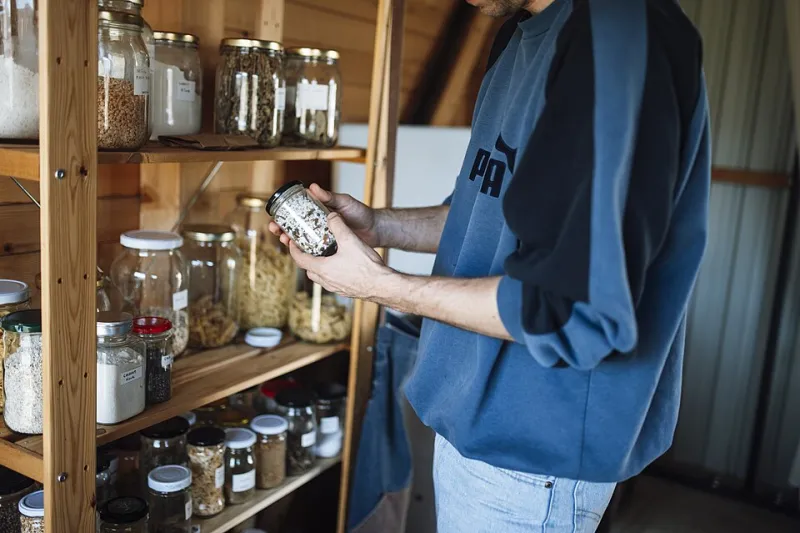
The slow Sunday is not about doing nothing beautifully. There is no requirement for linen aprons, sourdough starters or a matching set of glass storage jars. It can look like a supermarket soup, a library book, and an hour on the sofa with the radio on. The point is not the aesthetic. The point is the absence of demands.
Why calm became the new status symbol
Status symbols used to be loud: the right bag, the right postcode, the right table at the right restaurant. In 2026, a quieter signal is emerging. The person who says ‘I’m not doing anything on Sunday’ and actually means it is now, in certain circles, more enviable than the one with three plans and a train ticket.
That is partly about boundaries. A slow Sunday is a public declaration that your time is not endlessly available — not to work, not to social plans you don’t want, not to the small tyrant of the group chat. It is also about money. A low-spend weekend is not a compromise; for many people it is the only version of leisure that makes sense now. Batch cooking one meal, taking a flask to the park, having a bath instead of a spa day: these are not sad substitutes. They are sensible, pleasurable, and increasingly normal.
There is a cultural shift here too. The ‘that girl’ routines and the five-to-nine morning clubs have had their moment. They promised control through discipline. The slow Sunday offers something softer: permission. Permission to be unproductive. Permission to have a Sunday that does not set you up for the week so much as gently cushion you from it.
A starter guide for the unambitious
If you want to try a slow Sunday, the first rule is not to turn it into a project. There is no syllabus. No streak to maintain. No need to document it. But if you like a little structure, here is a gentle way in.
Start on Saturday night by deciding nothing. Not the meals, not the walk, not the ‘one nice thing’ you’ll do. Put your phone to bed before you go to bed, or at least leave it charging in another room. The aim is to wake up without a to-do list already forming.
On Sunday morning, let the day arrive. Tea, coffee, whatever you actually drink. Breakfast that does not require a photograph. If you have a household, resist the urge to organise everyone into an activity. Some of the best slow Sundays involve people doing separate things in the same house — one reading, one napping, one pottering. Togetherness does not have to be a group outing.
At some point, make one thing for the week ahead. Not a full meal-prep empire. One pot of soup, a tray of roasted vegetables, a pan of lentils, a batch of something that will save you on a Wednesday. This is the practical heart of the slow Sunday: it is a low-effort bargain with your future self. You are not optimising. You are just making Tuesday a bit easier.
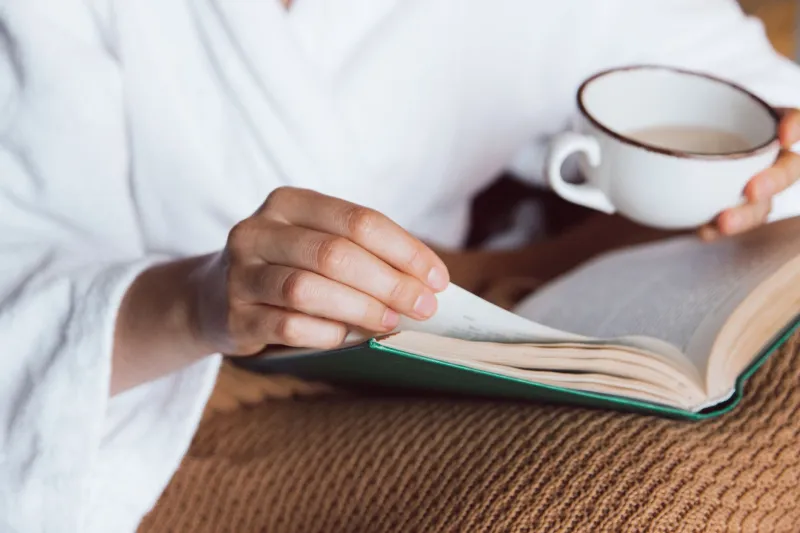
Then take the long bath. Or the long shower. Or the long nothing. If you can manage an hour without a screen, take it. Read a few pages. Listen to the radio. Walk to the end of the road and back without a podcast. The silence will feel strange for about ten minutes, and then it will feel like something you have been missing without knowing it.
In the afternoon, do one small admin task at most. Pay a bill, answer one email, put a wash on. Then stop. The rest of the day is not a holding pen for Monday. It is the day itself.
What the slow Sunday is really about
The slow Sunday is not a rejection of ambition or sociability. It is a recalibration. It says that rest is not a reward for a busy week; it is part of the week. It says that a life well lived might include a few hours where nothing is achieved, nothing is spent, and nothing is posted. In a culture that still struggles to value time that does not produce something, that is quietly radical.
And perhaps that is why it is spreading. Not because we have all become lazy, but because we have finally noticed how tired we are. The slow Sunday does not fix the working week. It does not solve the cost of living. But it offers a small, repeatable act of care — one that costs almost nothing and asks only that you let it happen.
So this weekend, if the brunch queue is long and the calendar is empty, consider leaving it that way. The slow Sunday is not a trend to keep up with. It is an invitation to stop keeping up at all.