Mend It Like You Mean It: Inside Britain’s Friendliest Fix-It Tables
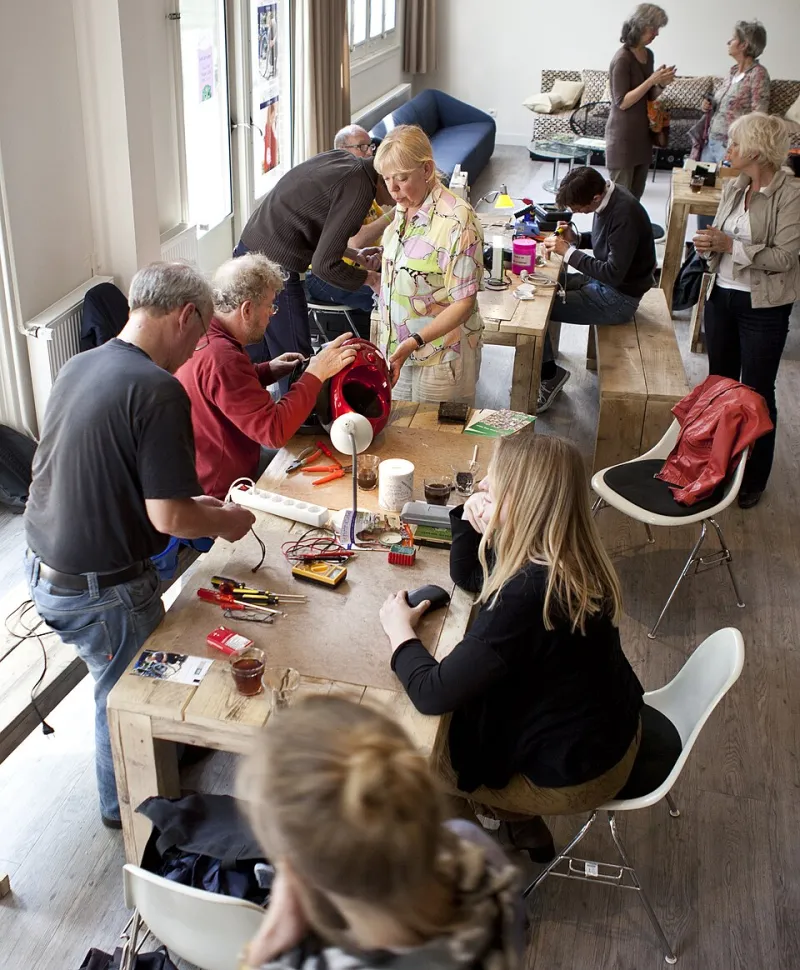
Photo: Ilvy Njiokiktjien, CC BY-SA 3.0, via Wikimedia Commons
There is a particular sound that tells you you’ve found one: the low murmur of advice, the clunk of a kettle being opened, the hiss of a soldering iron, and somewhere in the background, a tea urn being filled. Britain’s repair cafés are not glossy showrooms. They tend to meet in village halls, church annexes, libraries, community centres and the back rooms of pubs. And on a damp Saturday morning in November 2026, they are busier than ever.
The premise is simple. You bring something broken. A toaster that trips the fuse. A lamp with a loose connection. A cardigan with a hole in the elbow. A bike brake that never quite grips. Volunteers with patience and practical know-how take a look. If it can be fixed, it usually is. If it can’t, you leave with a better idea why, and sometimes with a recommendation for someone who can help. Tea is almost always involved.
Why now?
The cost-of-living squeeze has made us look differently at the things we own. When a new kettle costs £35 and a repair is free or a small donation, the maths is obvious. But repair cafés are not just a frugal hack. They are a quiet rebuke to the idea that everything is disposable. In 2026, with right-to-repair rules shaping how manufacturers think about spare parts, and with more of us trying to buy less, the local fix-it table feels less like nostalgia and more like common sense.
There is a social side too. The first repair café opened in Amsterdam in 2009, and UK groups began appearing in the early 2010s. Since then, the format has spread through transition towns, libraries, faith groups and community associations. The appeal is not only environmental. It is also the rare pleasure of being in a room where someone knows how to do something useful, and is happy to show you how.
The scene at the table
Walk into a typical session and you’ll see a sort of gentle triage. A host greets you, takes your name, and asks what you’ve brought. There may be a booking system online, or a paper list on the door. You’ll be pointed towards the right volunteer: the electricals bench, the sewing table, the bike stand, the woodwork corner. Some cafés have a ‘no microwaves’ rule for safety reasons; others can’t touch certain sealed appliances. Nobody minds telling you what they can and can’t do.
At the electricals table, a volunteer might open a toaster with the care of a watchmaker. At the textiles table, a cardigan gets darned while its owner learns which needle to use. At the bike stand, a brake cable is adjusted and a chain is checked. The atmosphere is not solemn. People chat. Someone mentions a leaky tap. Someone else recommends a local plumber. A child watches a sewing machine for the first time.
It is not a drop-off service. The best repair cafés encourage you to sit alongside the volunteer, ask questions, and have a go yourself. That might mean holding a torch, turning a screwdriver, or simply learning the name of the part that failed. The goal is not only a working object. It is a little more confidence next time something goes wrong.
The quiet etiquette of asking for help
Repair cafés run on goodwill, and a few small habits make the whole thing smoother. First, book ahead if the café asks you to. Slots are often limited, and turning up with a car boot full of broken things is not the spirit of the thing. Bring one or two items, not a house clearance.
Second, bring what you can: the manual, the missing screw, the spare part, the charger, the fabric patch. If you don’t have them, bring patience instead. Volunteers are not magicians, and some faults need a part that nobody has in a biscuit tin. Third, be ready to hear ‘no’. Some items are unsafe to repair, some are designed to be unrepairable, and some just need a specialist. A good volunteer will explain why rather than poke around and hope.
And do ask before you take photographs or record advice. Most people are happy to share, but the café is a community space, not a content studio. A donation is welcome if you can manage it. So are biscuits.
How to find your local session
Start with a search for ‘repair café near me’, then check the Repair Café UK directory and The Restart Project’s event map. Local transition groups, libraries, churches, mosques, community centres and council sustainability newsletters often list sessions too. Village noticeboards still work. So do neighbourhood Facebook groups, though a phone call to the library is usually faster.
If there isn’t one nearby, there may be a repair workshop, a mending circle, a bike kitchen or a ‘library of things’ that runs fix-it sessions. Some high streets now host monthly repair events in empty shop units. The format varies, but the principle is the same: bring a broken thing, meet someone who can help, and stay for a chat.
What to bring
A faulty item, ideally small enough to carry. The relevant manual or model number if you have it. Any parts you’ve already bought. A bag for the screws. And a willingness to learn. If you’re bringing clothing, wash it first. If you’re bringing an electrical item, check whether the café has a PAT testing volunteer or a policy on mains appliances. If you’re not sure, ask when you book.
The real repair
Repair cafés are sometimes described as an antidote to throwaway culture, which is true but a bit grand. They are also just practical. A toaster that works again is a toaster that doesn’t need replacing. A darned cardigan is a cardigan you’ll wear. A room full of people asking questions is a room where skills get passed on.
In 2026, that feels quietly valuable. Not because everything old is better, but because some things are worth a second look. The repair café next door isn’t a movement you need to join with a manifesto. It’s a table, a plug socket, a biscuit tin and someone saying, ‘Let’s have a look.’ Take something broken. See what happens.