Bring a Hanger, Leave with a Story: The Quiet Rise of the Neighbourhood Clothes Swap
In 2026, the most fashionable room in town might be a church hall with a slightly temperamental radiator and a handwritten sign saying ‘Try the rail by the window’. That is where the clothes swap has quietly become a Saturday night out: not a jumble sale, not a stylist’s pop-up, but a low-stakes gathering of neighbours with tote bags, honest mirrors and a shared sense that our wardrobes could do with a breather.
The pitch is simple. You bring clothes you no longer wear, you take home something you will, and nobody has to pretend they enjoy shopping for sportswear in January. But the real appeal is less transactional than that. A clothes swap is a style reset, a conversation and a very British sort of night out all at once — one where the dress code is ‘something you already own’ and the bar is a trestle table with squash and a plate of flapjack.
It Starts With a Bag by the Door
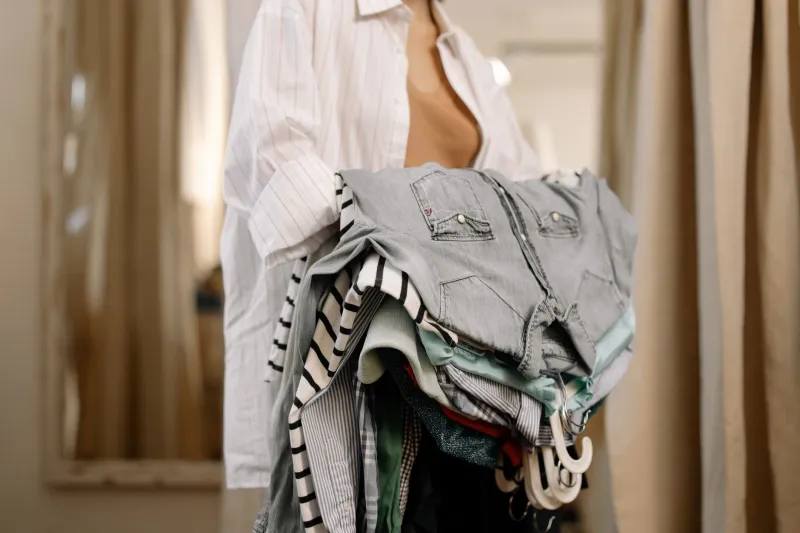
The first ten minutes are always the same. People arrive clutching bags, slightly apologetic about what is inside, and hover near the door until someone says, ‘Just pop them on the rail.’ Then the room loosens up. Coats come off. Someone recognises a jumper. Someone else is thrilled by a coat that never quite suited its original owner.
Most swaps run on a simple entry fee — £3 or £5, often going to a local charity or the hall fund — and a one-in, one-out spirit rather than strict token counting. You are not swapping item for item like a footballer transfer. You are adding to a communal rail and taking what works. That lack of accounting is what keeps it friendly. The point is not to extract maximum value. The point is to send good clothes round again and come home with something that feels new to you.
The Rules Are Simpler Than You Think
The best swaps have a short, clear set of rules, usually printed on a sheet by the tea urn. Bring clean clothes you would be happy to lend a friend. Bring hangers if you can. No broken zips, no mystery stains, no items that need a specialist dry clean before they can be worn. Anything left at the end goes to a local charity shop or textile recycling, so nobody is quietly dumping a bag of regret in the corner.
Some swaps use tokens: you get one per item you bring, up to a sensible limit, and spend them on the rail. Others are free-for-all, which can be chaotic but also generous. A few now have a ‘mending corner’ with a needle, thread and someone who can actually sew on a button. That corner is often the most popular part of the night, not because everyone is suddenly a seamstress, but because it slows the whole thing down. You sit, you chat, you decide whether that skirt really needs taking in or whether it just needs a different owner.
What Deserves a Second Life (and What Doesn’t)
A good rule of thumb is this: if you would feel comfortable handing it to a neighbour and saying ‘I thought of you’, bring it. That means the navy blazer you bought for a job you no longer do, the dress that fit in a different decade, the jeans that are excellent but not your shape. It also means the scarf you love in theory and never wear in practice.
Leave behind anything that is stained, bobbly, missing buttons or held together by hope. Leave the underwear, the gym leggings that have seen better days and the shoes that pinch. A clothes swap is not a bin with a social life. The whole thing works because the rail is good — not simply full. If you would not put it on a rail in a shop, do not put it on a rail in a hall.
A Style Reset Without the Spend
There is something unexpectedly clarifying about seeing your old clothes on someone else. A jumper you had written off looks brilliant on a stranger. A jacket you thought was ‘not really you’ suddenly makes sense with someone else’s jeans. Meanwhile, you are trying on silhouettes you would never have picked up in a shop, because there is no price tag making the decision feel important. If it fits, it fits. If it does not, you put it back.
That is the quiet power of the swap. It resets your eye. You notice colour, fabric and fit rather than logos and newness. You might come home with one excellent coat and a renewed sense of what you actually wear. You might also come home with nothing, which is allowed. In fact, it is often the sign of a good night: you have looked, you have considered, and you have decided your wardrobe is fine as it is.
Why It Works as a Night Out
Plenty of social events ask you to shout over music or spend £14 on a drink you did not really want. A clothes swap asks much less. You can talk to strangers without it feeling like networking. You can bring a friend or arrive alone. You can be 22 or 62. You can spend most of the evening by the biscuit table and still have a perfectly good time.
It also sidesteps the lecture. Nobody needs to be told that fast fashion is a problem; most of us already know. A swap simply offers a practical alternative that happens to be fun. It is sustainability without the hair shirt, community without the forced icebreakers, and a Saturday night that ends with a full tote bag and, more often than not, a few new names to say hello to in the street.
Hosting One Without Losing the Plot
If you fancy running your own, keep it small to begin with: 15 to 25 people is plenty. A village hall, community centre, pub back room or the room above the Co-op all work. You need rails or sturdy clothes racks, a few full-length mirrors, decent lighting, a table for tea and cake, and a clear sign explaining the rules. Ask people to bring hangers and a bag to take things home in. Put someone friendly on the door. Label the rail by size or type if you can, but do not over-engineer it.
Timing matters more than decoration. Two hours is usually right: half an hour to drop off and sort, an hour to try on and chat, half an hour to tidy up. Advertise it as a swap, not a sale, so nobody turns up expecting to make money. Charge a small entry fee if you need to cover the hall, and decide in advance where the leftovers will go. Then let it be a bit imperfect. The best swaps are not glossy. They are the ones where someone finds a coat, someone else finds a friend, and the tea runs out at exactly the right moment.
The Bit Nobody Tells You
You may leave with less than you brought. You may leave with a jumper that smells faintly of someone else’s washing powder and a book recommendation you did not expect. You may spend twenty minutes discussing the correct way to hang a dress. And you will almost certainly see one lone scarf on the rail at the end of the night, waiting for its next chapter.
That is the charm of it. A clothes swap is not really about clothes. It is about giving good things another go, and giving a Saturday night back to the simple pleasure of a room full of people saying, ‘That looks lovely on you.’