The Once-a-Year Toolkit: Why Britain’s Borrowing Shelves Are Quietly Brilliant
Photo: Farkasbarack, GPL, via Wikimedia Commons
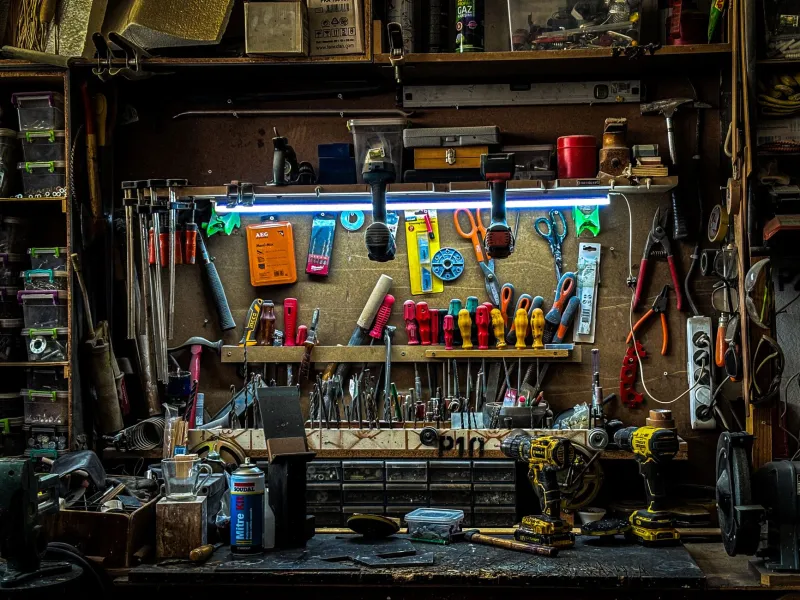
There is a cupboard in many British homes that tells a quiet story about who we think we are. It holds a drill in a box, a wallpaper steamer, a fondue set, a camping stove, and a pair of folding chairs that have been to exactly one festival. We bought them for a specific Saturday, convinced that the future would be full of shelves to put up and cheese to melt. Then the Saturday passed, and the cupboard filled up with optimistic maybes.
That cupboard is the reason Britain’s library of things movement feels less like a trend and more like common sense. Across the country, in high street units, church halls, libraries and community centres, borrowing shelves are doing a brisk trade in the stuff we need occasionally and store reluctantly. You join, you reserve, you collect, you return. It is not a shop, and it is not a charity shop. It is closer to a very practical neighbour with an unusually well-organised shed.
The shelf that saves you a shed
Library of things schemes work on a simple promise: pay a small membership or borrowing fee, and take home an item for a few days. The catalogue is the fun part. Pressure washers and carpet cleaners sit next to sewing machines, projectors, gazebos, cake tins, folding tables and camping kit. Some schemes lend out hand tools and gardening equipment; others have taken delivery of ice-cream makers, disco lights and the kind of long ladders that no one should really keep in a flat.
The name is deliberately plain. These are libraries for objects, not books, and the idea is that a town can share a decent drill rather than each household buying one that gets used twice a year. In 2026, as household budgets stay tight and small homes get smaller, that logic is hard to argue with.
The quiet maths of borrowing
Let’s do the unglamorous sums. A decent pressure washer costs £80 to £150, takes up most of a shed shelf, and gets wheeled out for one weekend in spring. A carpet cleaner is similar, except it also needs fluid, storage and a certain amount of faith that you will actually use it again. Borrowing one for a weekend costs a fraction of that, and when you hand it back, your hallway is still a hallway.
The point is not that buying things is wicked. It is that occasional-use items are a bad fit for modern British homes. We are not a nation of cavernous garages; we are a nation of under-stairs cupboards, loft hatches and the bit of the kitchen where the recycling lives. Every borrowed item is a small act of spatial liberation. It also quietly reduces the demand for new stuff, which is good for the planet without requiring anyone to lecture you about it. No one is asking you to knit your own toilet roll. Just maybe don’t buy a third staple gun.
The social side of a socket set
Here is the bit that surprises people. A library of things is not a vending machine. It is a place where you talk to someone. You queue behind a man returning a hedge trimmer and leave with his recommendation for a local roofer. You ask the volunteer how the steam cleaner works, and she tells you to keep it moving or the wallpaper will bubble. You come for a staple gun; you leave with a recipe for courgette chutney and the name of someone who can fix a lamp.
That is the quiet magic of the borrowing shelf. It turns a transactional errand into a neighbourly exchange. In a year when so much of life has been flattened into an app, there is something deeply civilised about handing over a drill and having a chat about fence panels. The library of things is not just anti-clutter; it is quietly pro-conversation.
Borrowing etiquette, without the rulebook
Most schemes have a few sensible rules, and they boil down to this: borrow as if the next person is your neighbour, because they are. Book ahead for popular items like carpet cleaners and projectors, especially in the run-up to bank holidays and the school summer holidays. Return things clean, dry and on time. Empty the grass box, wipe down the drill, and don’t return a tent with a weekend’s worth of mud still attached.
If something breaks, say so. A good library of things would much rather hear about a faulty switch than discover it when the next member plugs it in. Consumables are usually not included, so check whether you need to bring your own drill bits, cleaning fluid or gas canister. And if you can afford it, pay your membership with good grace; the fees keep the shelves stocked and the lights on. The golden rule is simple: return it as you would like to find it.
How to find one near you
Start with a search for “library of things near me” and your town name. Local councils, community centres, church halls and independent libraries often list borrowing schemes on their noticeboards. Social media groups and neighbourhood apps are useful too, as are the websites of established groups such as Library of Things and Share Shed. Ask about membership costs, deposits, loan periods and insurance before you join.
If there isn’t one nearby, you don’t need a grand plan to start one. Begin with a survey: what do people actually need? Storage and insurance matter more than a fancy website. A locked cupboard in a community hall, a volunteer rota, a simple booking sheet and ten good-quality items can be enough to test the water. Partner with a library, parish council or existing community group. Keep the catalogue honest. A borrowing scheme that lends a drill and a ladder will earn trust faster than one that promises a hot tub.
Why the occasional-use item is the hero
The everyday kettle is not the problem. It is the once-a-year things that fill our cupboards and our heads: the drill for one shelf, the projector for one birthday, the camping stove for one hopeful summer. These are the items that make a home feel full of possibility and, eventually, full of clutter.
Borrowing gives them somewhere to live without giving them your loft. It saves money, sure, but it also saves space for the things you actually use. And it turns a lonely purchase into a small, pleasant exchange with someone who lives nearby. In 2026, that feels like a very good deal. The best things in life are borrowed, returned, and borrowed again.