Sculptures, Spritz and the Last Train Home: The Friday Night Britain Is Quietly Reclaiming
Friday night in Britain has a familiar script. Someone suggests a pub. Someone else suggests a film. There is a brief, hopeful discussion about a restaurant, followed by the quiet realisation that nobody booked and everywhere decent is full. By 8pm, you are standing in a crowded bar with a lukewarm drink, shouting about nothing in particular, wondering why the week has ended this way.
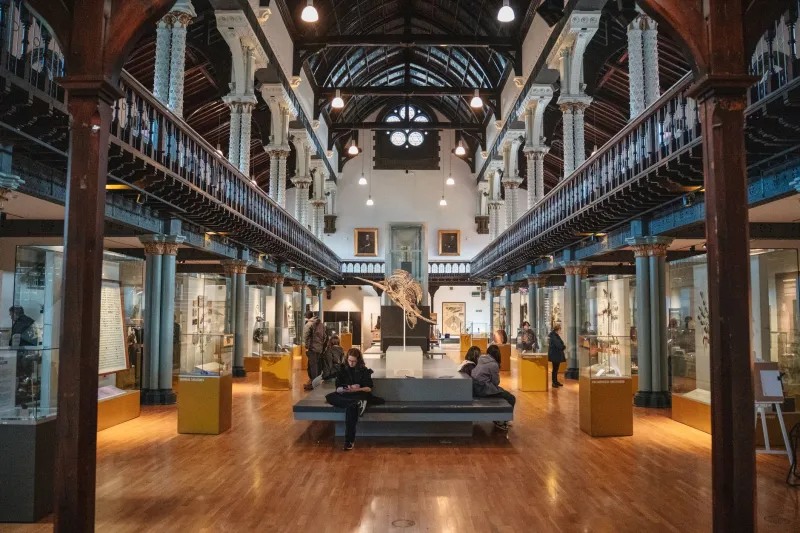
There is another option now, and it is hiding in plain sight behind a cloakroom desk. Across the UK, museums and galleries are opening late, turning their grand halls and temporary exhibition spaces into something that sits somewhere between a cultural outing and a night out. There are DJs in atriums, pop-up bars beside sculpture courts, short talks in side rooms, and — crucially — long stretches of gallery where nobody is rushing you along. This winter, the museum late has become the Friday night for people who want atmosphere without the aggro.
The gallery after the last school group
Museum lates are not a brand-new idea. Tate and the V&A have been running late openings for years, and smaller institutions have long used evening events to reach people who cannot visit during the day. But the format has shifted. What was once a slightly earnest add-on — a talk, a glass of wine, a few open rooms — now feels like a proper night out, with its own rituals, its own crowd and its own quiet codes.
The best versions are not trying to turn a gallery into a nightclub. That would miss the point. The pleasure is in the contrast: a bassline drifting under a high ceiling, a cocktail on a tray next to a case of Roman coins, the strange glamour of being in a building that usually closes at 5.30pm. You are not there to dance until 2am. You are there to do something slightly unusual with an ordinary Friday.
And the timing is right. In the colder months, when beer gardens lose their appeal and the walk home from the station feels longer, a museum late offers shelter without the pressure of a restaurant booking. It is warm, it is dry, it has toilets that are not a national scandal, and there is always somewhere to sit. These are not small things.
A night out with no dress code and no dance floor
The appeal starts with the crowd. A museum late is not one scene. You get couples on a date, groups of friends who want to do something different, solo visitors with headphones, and people who have come specifically for the talk and are leaving before the bar gets busy. Nobody is judging your shoes. Nobody is checking whether you know the DJ. The social pressure is low, which is precisely why it works.
That low-pressure mood is a big part of the draw for people who find traditional Friday nights exhausting. If you do not drink, there is no awkwardness about nursing a tonic water. If you are on your own, you can drift between rooms without feeling like you are loitering. If you want to leave at 8.45pm because you have had enough, you can. The night does not demand that you commit to a table, a ticket for the whole evening or a conversation with a stranger.
It also offers something that a lot of Friday nights struggle to provide: permission to be curious. You can spend twenty minutes in front of one painting, or skip the blockbuster exhibition entirely and poke around the permanent collection. You can listen to half a talk and wander off. You can follow the sound of a DJ through a corridor and end up somewhere you did not plan to be. That kind of unstructured time is rare in adult life, and it feels especially good on a Friday.
Why the quiet corners matter
The organisations that do these nights well understand that not everyone wants to be in the middle of the buzz. The best museum lates have a rhythm: busy atrium, calmer galleries, a few seats tucked away, a room where the music fades to almost nothing. The point is not to fill every space with programming. It is to let the building breathe.
Those quieter corners are where the night really happens. You might find a bench in a gallery of Islamic art, a window seat overlooking a courtyard, or a stretch of corridor where the only sound is footsteps. It is a strange and lovely thing to be in a public building after hours and feel genuinely unhurried. The daytime museum is often about information: labels, audio guides, crowds shuffling past vitrines. The late-night museum is about mood.
This is also why the format suits winter so well. A dark walk to a brightly lit gallery feels like an event in itself. The coat you hand over at the cloakroom becomes a small liberation. For a couple of hours, you are not carrying anything: no bag, no laptop, no to-do list. You are just a person in a room full of interesting objects, with a drink in your hand and nowhere else to be.
The economics of a late pass
Museum lates vary wildly in price. Some are free with a suggested donation; others charge a modest ticket fee, especially for exhibitions or headline talks. Once you are inside, the bar is usually the main expense, and it is rarely cheap. It is not a budget night out in the way a night at the pub might be. But it can be better value than a mid-range dinner and a film, and it has a built-in conversation piece that does not rely on how everyone's week went.
It is worth checking what your ticket actually includes before you book. Some events give you access to the whole museum; others keep certain galleries closed. Some sell out weeks in advance, especially the ones with a big name DJ or a well-known speaker. If you are going with a group, it is worth agreeing on a meeting point early — the atrium is usually the obvious one — because phone signal in a thick-walled Victorian building can be optimistic at best.
How to do a museum late well
First, eat something before you go. This is not a dinner substitute, and the bar snacks are rarely the main event. Second, arrive early enough to see the thing you actually came for, whether that is a talk, a specific gallery or the exhibition everyone has been talking about. Third, leave room for wandering. The best moments are often the ones you did not plan.
Dress for the walk home, not for the venue. Museum lates are not formal, but they are also not the place for shoes that punish you on a stone floor. Take a small bag, use the cloakroom, and keep your hands free. And if you are going solo, do not feel you have to stay for the whole thing. The beauty of the format is that you can treat it like a good film: arrive, pay attention, leave when it is done.
The new Friday ritual
What makes the museum late so appealing is that it offers a different version of Friday night — one that is social without being loud, cultural without being solemn, and flexible enough to suit almost any mood. It does not ask you to have a big night. It just asks you to turn up and look around.
In a country where the default Friday can feel like a choice between a crowded pub and the sofa, that is a quietly radical thing. The galleries are warm, the lights are low, and the last train home is still a reasonable hour away. This winter, the best Friday night might just come with a wristband and a wing of old masters.