Bring a Cushion, Stay for the Ceilidh: Why the Village Hall Is Britain's Best Night Out
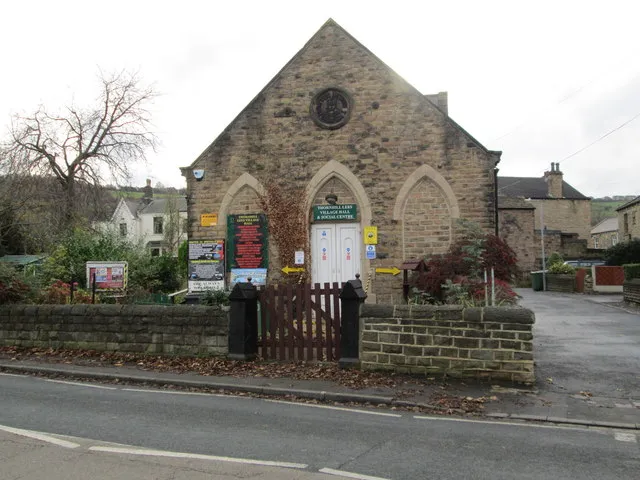
Photo: Betty Longbottom , CC BY-SA 2.0, via Wikimedia Commons
The first thing you notice is the smell. Floor polish, a hint of old hymn books, and something faintly toastie drifting from a hatch in the back wall. The second thing you notice is the acoustics — because a room built in 1934 with a high ceiling, hard walls and absolutely no acoustic design turns out to be accidentally perfect for a string quartet.
There are ninety chairs out. There are a hundred and ten people in the room. Someone has fetched more from the cupboard under the stage, and a man in a fleece is doing a brisk trade in squash at the back. Outside, the car park is a hedge and a puddle. Inside, a cellist is tuning up while a child in wellies watches from the front row with her mouth open.
This is a Friday night out in Britain in 2026, and increasingly it's the good one.
The Room That Does Everything
Village halls were never designed to be interesting. They were designed to be useful — polling station on a Thursday, jumble sale on a Saturday, keep-fit on a Tuesday, wedding reception if the marquee falls through. That utilitarian brief is exactly what makes them such strange, generous venues now.
There's no listed programme to protect, no brand to honour, no sponsorship banner to keep happy. The committee decides. If the committee fancies a night of silent film with a live pianist, that's what happens. If it fancies a craft market followed by a ceilidh that runs past midnight, that happens too, and the same trestle tables do both jobs.
"We can turn the whole thing round in about forty minutes," says Ros, who has been programming a hall on the Shropshire–Powys border for six years. "Market stalls out, band in, bar in the kitchen hatch. It's not glamorous. But it means we can put on things a proper theatre wouldn't touch, because we're not paying for a building we only use twice a week."
Where the Slick Rooms Fall Down
A city venue charging £26 a ticket has to sell 300 of them before the lights go up. A village hall charging £9 has to sell ninety, and if it sells a hundred and ten, everyone goes home pleased.
That arithmetic changes what's bookable. Touring cinema schemes have found halls to be ideal — a projector, a screen, a decent blackout and you've got a 90-seat picture house for the price of the biscuits. Small-scale opera companies use them as warm-up rooms and full performances at once. Folk bands, who have watched urban grassroots venues close one by one, have discovered that a hall with a decent floor and a car park is a reliable night's work.
The result is a programme that would look odd on a city listings page: a Buster Keaton double bill, then a talk on hedge laying, then a tribute act, then a properly good ceilidh band on a Saturday. Nobody is curating a vibe. It's simply what people asked for.
The Quiet Thrill of Familiar Faces
Here's the part that no amount of money can buy in the city: everyone in the room lives within about four miles of each other.
You will know the woman selling raffle tickets. You will sit next to someone from the school gate. The interval will last half an hour because nobody wants to stop talking. Somebody's teenage son will be doing the sound, badly. Somebody else will have brought their own cushion, because everyone who comes regularly brings their own cushion — a small, unspoken marker of status.
That's the low-key glamour of it. Not velvet seats and £14 negronis, but the mild, agreeable shock of a room full of neighbours deciding to be somewhere together on a dark Tuesday.
The First-Timer's Field Guide
A few things worth knowing before you go.
Go early. Doors are usually half an hour before, and the bar — wine, beer, squash, sometimes a jug of something someone's aunt made — closes at the interval with alarming finality.
Bring cash. Card machines are increasingly common but the raffle tin is not.
Dress for a draught. Halls are warm in the middle and cold at the edges. Layers, and a scarf you don't mind sitting on.
Sit near the front. The back third is where the acoustic dies, and the back row is also where you'll be asked to help stack chairs afterwards. Not a disaster, but know what you're agreeing to.
Say yes to the raffle. It is the entire funding model.
How to Find Your Nearest Good Night Out
Start with the hall itself rather than the big listings sites — they rarely reach this far. A few routes that work:
- The noticeboard. Unfashionable, unbeatable. Post offices, churches, the Co-op and the hall's own gate all carry programmes that never make it online.
- Parish and community council websites. Dull to look at, reliable for dates. Many publish the hall's full booking calendar, which doubles as a what's-on list.
- The hall's own social pages. Most now run a Facebook page admins update from the kitchen during the event. Follow it and the algorithm will do the rest.
- Rural touring and arts schemes. Regional organisations that move small-scale theatre, film and music around the countryside publish their full itineraries, village halls included. Worth a browse even if you've never heard of them.
- Village Halls Week. The annual March campaign, running since 2018, sees halls across the country throw open their doors for open days, teas and taster events — the easiest possible way to see what your local one is actually like inside.
- Ask. One enquiry at the shop, the pub or the school gate will get you a printed programme and, more likely than not, a lift.
The Long Game
Village halls survive on a strange kind of stubbornness. They are run by volunteers, funded by a combination of hire fees, raffles, quiz nights and small grants, and they are almost never anybody's idea of a cool night out until they are.
What's changed isn't the buildings. It's that a generation of programmers, many of them relatively new arrivals, has clocked that these rooms are cheap, adaptable, licence-friendly and desperate for content. Add an audience that has tired of paying £18 for a warm lager in a converted warehouse, and you get something quietly brilliant happening in the middle of nowhere, twice a month.
The lights go down at 7.30pm sharp. The chairs are hard. The tea is strong. Somebody's phone will go off. And for two hours, a room full of people who could walk home if they had to will sit together and watch something strange and good and local.
Take a cushion.